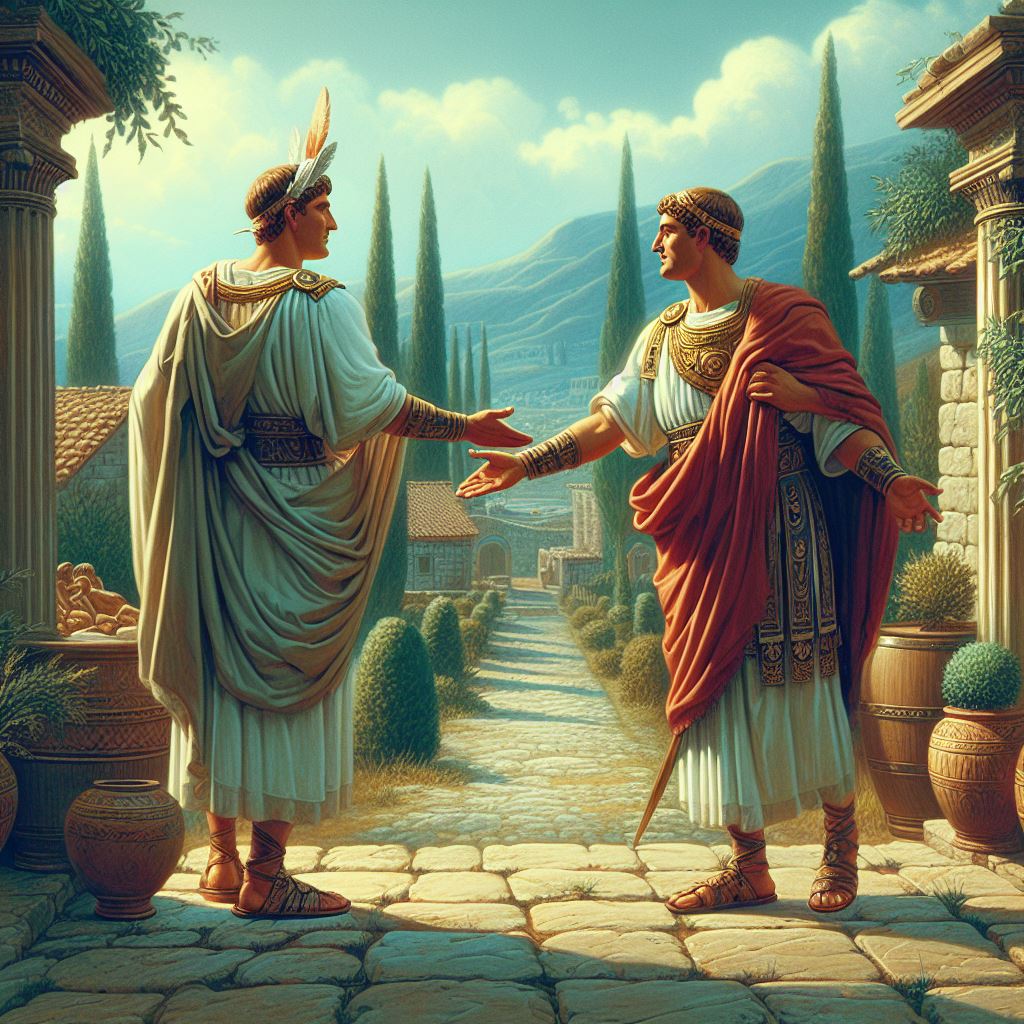
Powers rise and fall, inevitably. There is to some extent a predictability in not only the outcome, the general pattern, but the increments between beginning and end. Can we stop the onrush of time? Can a state beset by waning relative power be saved?
εὐδαιμονία
What is the purpose of “the state”, as a product of historical development and as a political artefact? Well, perhaps it is sufficient – even desirable – to say it is to facilitate εὐδαιμονία. That is to say, the holistic and rational pursuit of the ultimate form of ἀρετή (Aristotle, Nic. Eth., 1098a) is the final cause of political societies. This facilitation of a general attainment of virtue, the common good, is a fundamental determiner of appropriate use of political power (CCC 1903).
A state that fails to provide this fails in its duty to its citizen body. It will neglect its lesser allies, exposing it to great risks when the tides of fortune change. And it will succumb to hubris and self-destructive behaviour.
ἐγκράτειαν
In the first instance, states maintain ethical standards to avoid decline and disaster. Vigilance is vital in this regard. For the people, moral principles should be generated democratically and enforced socially. This is sufficient to allay outrageous activities on an individual basis. But this is insufficient to constrain political power, especially the acute danger stemming from arrogance.
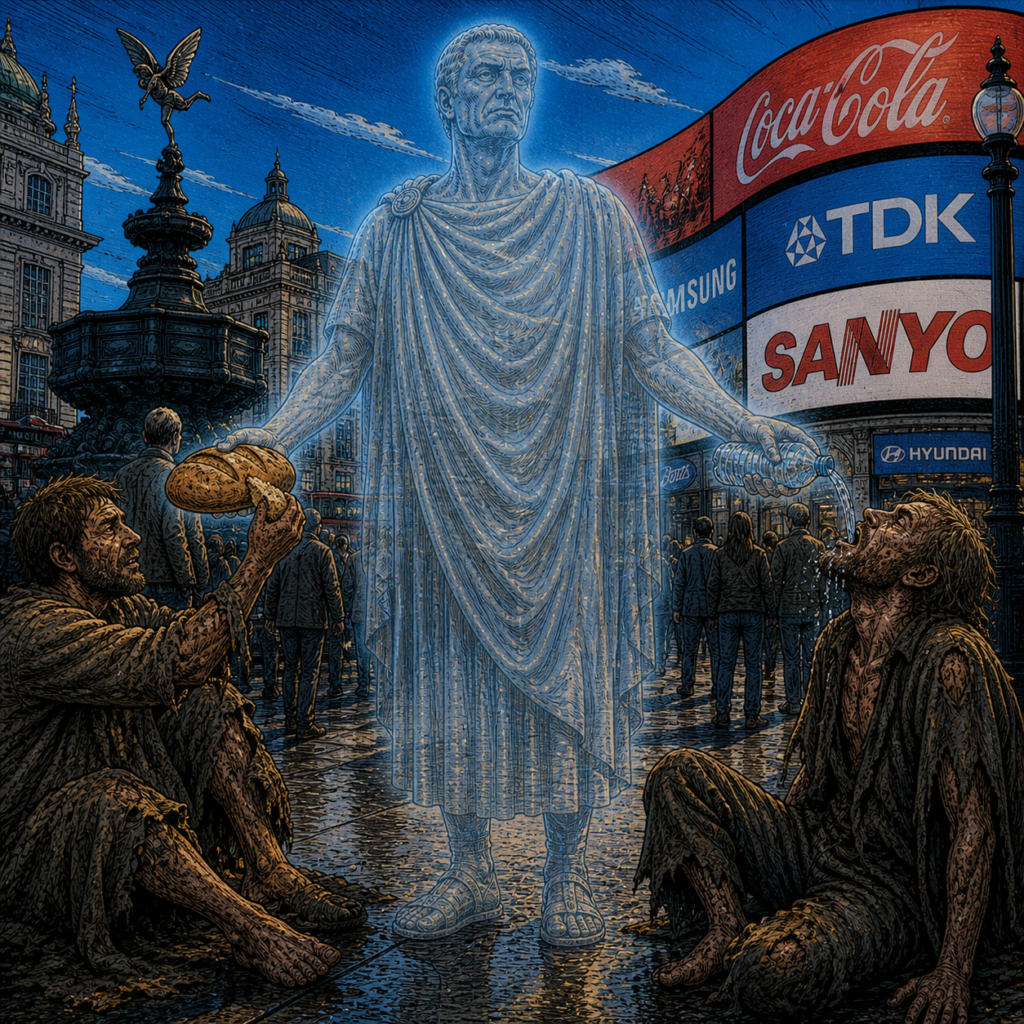
ἐν δὲ τῇ γνώσει τὴν ἐγκράτειαν, ἐν δὲ τῇ ἐγκρατείᾳ τὴν ὑπομονήν, ἐν δὲ τῇ ὑπομονῇ τὴν εὐσέβειαν (2 Peter 1:6)
Hubris feeds on exceptionalism, in turn the result of the abandonment of higher principles (Augustine, De Civitate Dei, XIV, 13). Self-harming behaviours fill the vacuum appearing in the absence of stringently enforced social values (CCC 2339).
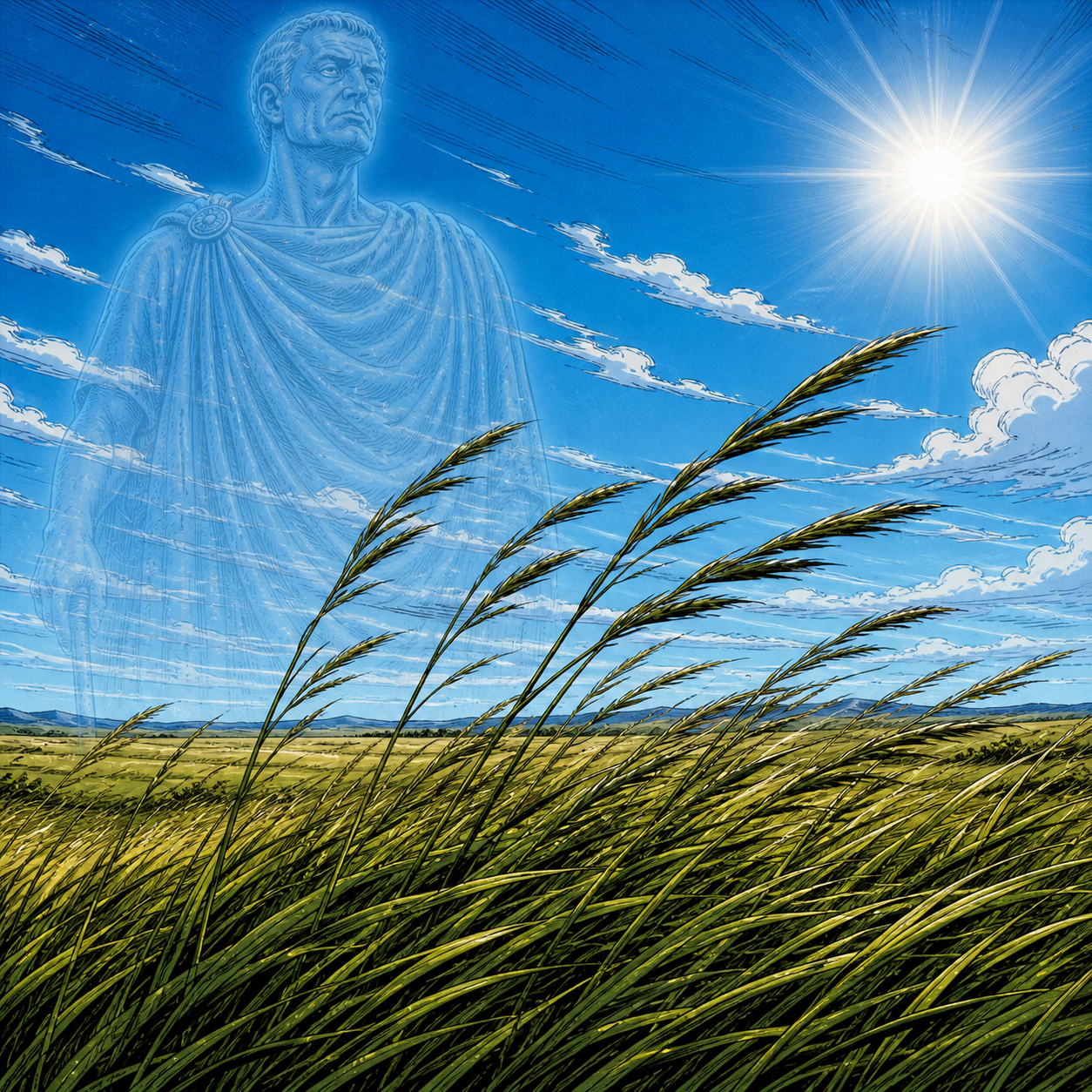
Such controls must be constituted in a top-heavy fashion. As the wind bends blades of grass, states coercively influence the behaviour of their citizens (Analects, 12.19) – for better or worse. Ethical controls must not only be deliberately implemented but also proactively maintained, as even well-meaning values are powerless if they are not ballasted by constant cultural reinforcement.
Cultural institutions and individual citizens must collaborate with the institutions of the state to devise new top-heavy systems and structures to maintain moral conduct. Those who govern have no right to make demands of the masses if they stray from morality (John XXIII PT 49). Each generation will require new tools according to expediency.
The consequences of proceeding without these measures are dire.
ὑπερήφανος
Failed internal moral regulation leads not only to domestic distress, but external trauma, from the ultimate consequence of which is further harm to the state itself. There is a crucial lesson that is so often unheeded, unheard. To paraphrase, today’s great powers are tomorrow’s micro-states; today’s micro-states are tomorrow’s great powers (Hdt., 1.5.4).
Powerful states that become overpowered by hubris should prepare to be governed as though they are powerless, as they are not immune to the undulations of fortune (Hdt., 9.122.3). Disregard your lesser allies at your peril. Take them for granted, and the willing petitioners of your hegemony will become restive subjects.
While you may be more powerful now, in time, your turn in the cycle will end. There will be nothing to remove fortune’s cup (Mark 14:36), no mercy for ὑπερήφανος.
κύκλος
As with entropy in the laws of physics, the inconstancy of fortune is as immutable a fact in the political sphere (Hdt., 1.207.2). One can view the development, apogee, and decline of political societies as analogous to the lifespan of a living organism (Ibn Khaldun, Al-Muqqadimah, 3.12).
Fierce competition for political office, public displays of extravagance and opulence, and the jealous fear of losing power – these are the hallmarks of a state entering its denouement (Polyb., 6.57.5–10). States ultimately succumb to senility, plutocracy and the jealous destruction of hitherto allies, ultimately leading to destruction (Ibn Khaldun, Al-Muqqadimah, 3.15)
وَتِلْكَ ٱلْأَيَّامُ نُدَاوِلُهَا بَيْنَ ٱلنَّاسِ
(Qur’an, 3.140)
But perhaps there is a qualification to this seemingly inevitable “strange eventful process” (As You Like It, 2.7). These degenerative states have abrogated their finest and highest principles. By deviating from their values, they in all probability do the same for their final cause, the enablement of the good life.
Perhaps in this lies the shoots of a political remedy to τύχη’s inevitable inclement embrace.
κτῆμά τε ἐς αἰεὶ
Readers should derive from this a possession for all time (Thuc., 1.22.4), a lesson that transcends context, countries, kings. In the absence of jealously guarded values and principles, the state degenerates. It turns away from its purpose to facilitate its people’s pursuit of the good life. In the absence of values, arrogance, hubris, poor decision making, thievery and corruption at the highest level sow destruction within and without.
At a time like this, the end of a historical cycle? The end of an empire, or empires? A transition to a new multipolar era? Perhaps a day like the fateful one of Eleusis is coming again. A mistake, a miscalculation, a power in the death throes of decline, but before the inevitable path ahead has been revealed.
A line in the sand will be drawn that the incumbent cannot cross. Encirclement, amidst the place of the setting and that of the rising sun, as those before have found, is deadly.
Returning to values, rules, principle, will not abate the onrush of time. But it may return a state to the beginning of the cycle, and the return to its first cause.